Consultation or Public Meeting: Two Different Ways to Gather Views
Consultation or public meeting? Learn which format captures considered written feedback, live discussion, and the gaps each can leave before a decision.
The common mistake in choosing between a written consultation and a public meeting is treating them as interchangeable ways to collect opinions. That can cost decision-makers useful detail: a meeting may surface concerns that a form never prompts, while a written response can explain a complicated point that a short speaking slot cannot hold. The format shapes the input, not just the room in which it arrives.
For anyone trying to understand how a public decision is made, the distinction matters. A written consultation invites people to respond to questions or a proposal, usually over a set period. A public meeting brings people together to hear information, ask questions, and speak in a shared setting. Neither automatically represents everyone affected, and neither is a vote unless the process explicitly makes it one.
Why do people treat consultation or public meeting as the same thing?
Both formats are often described with broad phrases such as “public engagement” or “community input.” Those labels say little about what participants are asked to do. A consultation may accept a letter, an online form, or a response from an organization. A meeting may be a presentation followed by questions, a facilitated discussion, or a series of small-group conversations. The invitation and ground rules matter more than the label.
The mix-up also comes from expecting every engagement format to deliver the same result: a clear answer about what the public wants. Usually, the purpose is narrower. Officials may be seeking local knowledge, identifying objections, testing whether a proposed option is workable, or hearing how different groups could be affected. Those are different tasks, and no single format captures all of them equally well.
Before comparing formats, look for three things in the notice: the decision still open to change, the questions being asked, and what will happen to the responses. If those are missing, a reader cannot tell whether the event is meant to gather advice, explain a settled choice, or do both. Asking the organizer for clarification is more useful than guessing from the word “consultation.”
What goes wrong when the written response feels too demanding?
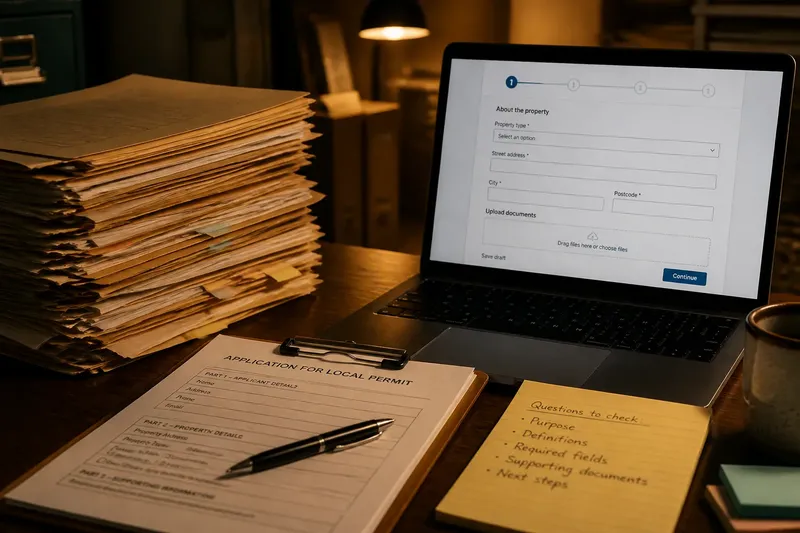
A written consultation can ask for a careful, reasoned response, but people may encounter a long document, specialized terms, several separate questions, and a form that assumes time and confidence. The result is not necessarily a lack of interest. It may be that the route into the process is too difficult, or that the prompts do not help a respondent explain what they know.
That format is especially useful for input people need time to assemble: a technical correction, a comparison of options, a personal account that is easier to write privately, or a response coordinated by a neighborhood group. It can also create a record that decision-makers can sort by question or theme. But a written form tends to capture what the questions invite. If it asks whether a person supports an option without asking why, the response may not reveal what needs changing.
Try to make the written route usable before judging the responses. Check whether the questions use plain language, whether people can answer only the parts they know, and whether alternative formats are offered for someone who cannot use the standard form. A concise response can still be substantive; a large packet is not a measure of public understanding. If the purpose is to learn about local conditions, leave room for respondents to describe circumstances the set questions did not anticipate.
What goes wrong when a public meeting becomes a queue?
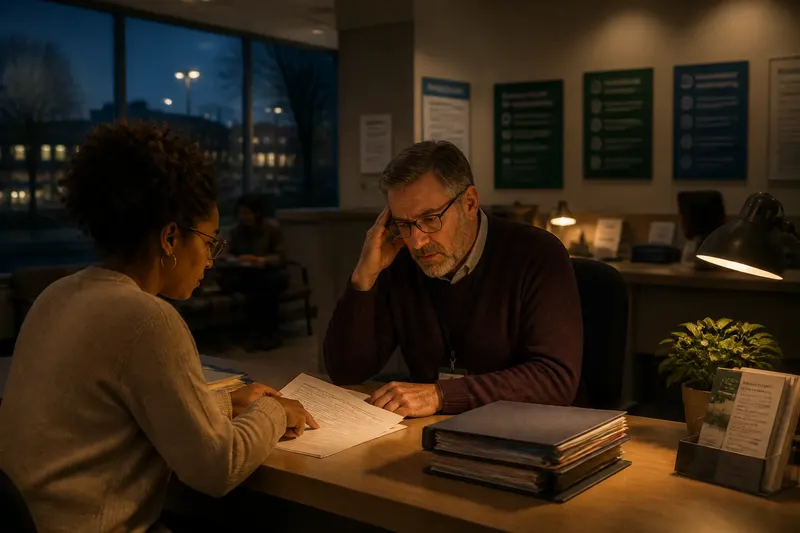
At a public meeting, the visible problem is often that a few speakers take most of the time, while others leave without speaking. A microphone line can make the process look open while favoring people who are comfortable speaking in public, can attend at the scheduled time, or have already organized their points. A room full of comments may still leave important experiences unheard.
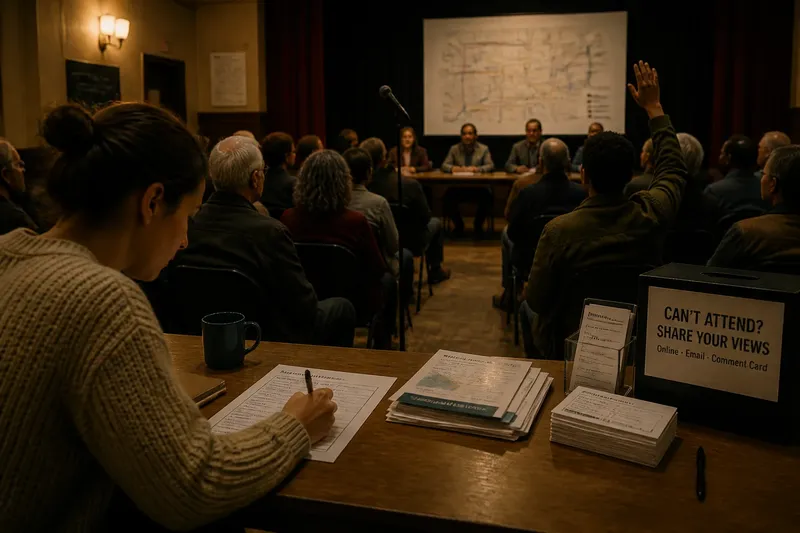
Meetings have a different strength from written forms: participants can hear one another and respond to points as they arise. A question from one person may clarify an issue for the room, and a facilitator may notice a disagreement that a written submission would leave isolated. This is valuable for matters where people need to understand trade-offs or where the discussion itself can expose missing information.
When the meeting format is producing a queue rather than a discussion, the organizer can use moderated questions, small-group sessions, written comment cards, or a follow-up channel. Participants can also ask whether comments submitted after the event will be included in the same record. These options do not make the meeting representative by themselves; they give people more than one way to contribute and reduce the pressure to deliver a polished speech on demand.
How should you choose between a consultation or public meeting?
Start with the kind of input the decision needs, rather than choosing the format that is easiest to host. If the issue requires detailed comparisons, written consultation can give people room to explain. If the issue involves competing views that benefit from direct exchange, a meeting can make those views visible to one another. When both kinds of input matter, combining formats may be sensible, provided the process explains how they will be considered together.
Imagine a local authority is considering changes to a bus route. It asks for written comments on which stops are difficult to reach and why, then holds a public meeting where riders can ask about the proposed alternatives and hear one another’s concerns. The written responses could capture a specific accessibility barrier in detail; the meeting could reveal that a proposed change affects several connected journeys. Those are different kinds of evidence, not two versions of the same answer.
In either format, check whether the invitation explains who can participate, how to submit input, what deadline or meeting arrangements apply, and what will remain open for decision. A meeting should not be mistaken for a public vote simply because people raise their hands. A consultation response should not be treated as a poll just because many submissions favor one option. The method of gathering views and the method of making the decision are separate matters.
Which questions should you ask before taking part?
Can a written consultation capture personal experience?
Yes, if the questions leave room for a person to explain the circumstances behind a view rather than selecting only from preset choices. A respondent can keep identifying details out of a public submission where the process permits, but should check how submissions are handled and published.
Does attending a public meeting mean my view is representative?
No. A meeting records the contributions of those who attend and speak, not the distribution of opinion across everyone affected. It can still provide useful knowledge, questions, and disagreement that decision-makers may not otherwise hear.
Can I submit comments after a public meeting?
Sometimes; the event notice or organizer can clarify whether a written channel remains open and whether later comments enter the same record. If no route is stated, ask promptly rather than assuming the discussion is the only opportunity.
What should happen after people provide input?
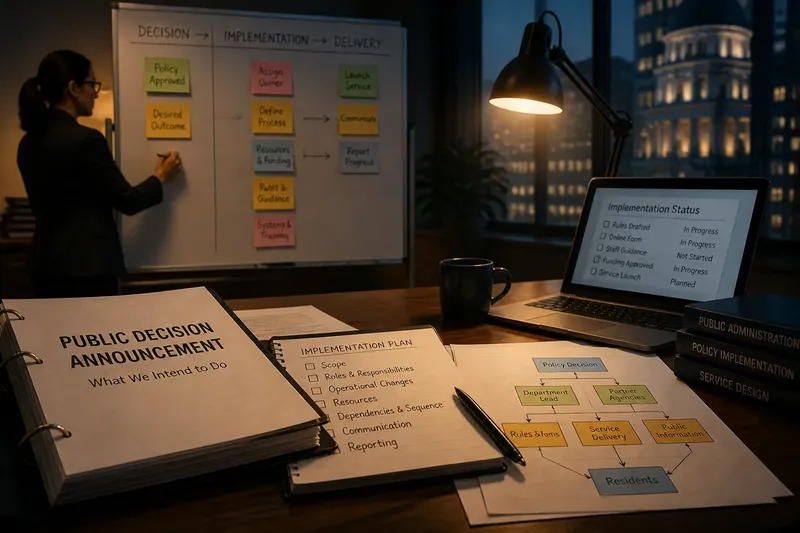
The process should describe how comments will be reviewed and how the eventual decision will be explained. Participants can look for a published response that identifies the main themes and indicates how they affected the decision, without expecting every suggestion to be adopted.
Why do some voices remain missing from both formats?
Each format has access barriers. A written response may require reliable internet, time, language fluency, or confidence with formal paperwork. A meeting may require travel, childcare, accessibility arrangements, or comfort speaking in a room. Holding one event or publishing one form does not remove those obstacles. It may instead make the missing voices less obvious, because the process still produces comments from the people who could participate.
Look for practical alternatives: an accessible venue, interpretation, a phone response option, translated materials, an online meeting, or a way to provide comments privately. Not every process can offer every option, but the invitation should make the available routes clear. A representative organization or community group may also submit a collective response; readers should distinguish that account from the individual submissions it may summarize.
There is a useful analogy in choosing a container: a funnel channels what enters it, while a tray lets different things sit side by side. A written form is more like the funnel when its questions tightly define the response; a meeting is more like the tray when people can introduce points in their own order. Neither shape is automatically better. The relevant question is whether it suits the input the decision needs and whether people can use it.
How can you tell whether the input was used?
Participation is easier to assess when the organizer explains the path from comment to decision. Look for a summary of themes, an account of which options changed or stayed, and reasons for the final choice. A response that merely counts submissions can hide the substance; a response that quotes a few vivid comments can hide the wider range. Good reporting makes clear what the format captured and what it could not establish.
For a reader comparing consultation or public meeting, the practical test is not which one attracts the larger crowd or produces the thicker file. Ask what each invited people to contribute, who could realistically take part, and how the record connects to the decision. That is how to distinguish a meaningful opportunity to inform a choice from an event that simply took place.
When the notice is vague, keep a copy of the questions or meeting agenda and ask the organizer what is still open to change. That small step makes it easier to tailor a response to the actual decision, rather than spending time arguing about a choice that has already been made.